Latest News
-
 February 5, 2026
Why corporate relations will define the green energy future
-
 February 5, 2026
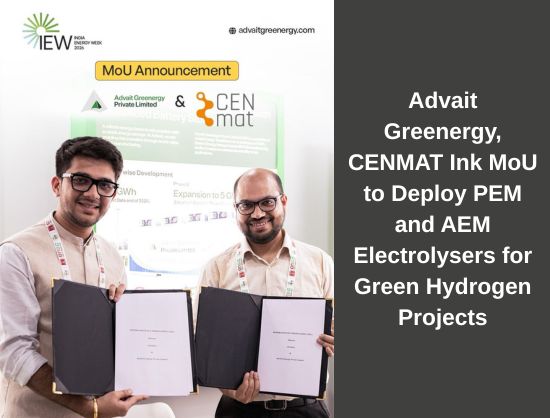
Advait Greenergy, CENMAT Partner to Scale Green Hydrogen Projects with PEM and AEM Electrolysers
-
 February 4, 2026
Advait Energy Transitions Limited's (NSE:ADVAIT) Popularity With Investors Is Clear
-
 January 30, 2026
India’s Battery Energy Storage Ambition Faces A Reality Check
-
 January 22, 2026
Budget Expectation
-
 January 22, 2026
Why Corporate Links Are Key To The Green Energy Shift
-
January 19, 2026
Turning ₹1 lakh into ₹52 lakhs: Is Vijay Kedia’s new green energy pick the next multibagger
-
January 6, 2026
Vatsal Kundalia of Advait Group on Scaling EPC Execution, Grid Resilience, and India’s Energy Transition
-
December 29, 2025
India’s Changemakers of 2025: Leaders Building the Next Economic Engine
-
 December 5, 2025
Integrating solar and storage for industrial users: Lessons from early projects in Gujarat
-
 November 27, 2025
Why battery storage is becoming non-negotiable for renewable-rich grids in India
-
November 14, 2025
Advait Energy Transitions consolidated net profit rises 142.86% in the September 2025 quarter
-
 October 13, 2025
Advait Greenergy inks MOU in Vibrant Gujarat for Investments and Projects worth INR 1,400 Crore including Electrolyser, Fuel Cell, ERS, and EPC Projects
-
 October 8, 2025
Advait Energy Transitions secures Rs 87-cr order from Powergrid
-
September 2, 2025
Future Leaders at Work: Building Career Pathways for Young Professionals in Core Industries
-
 August 22, 2025
Beyond Rhetoric: India’s clean energy investments speak for themselves
-
August 8, 2025
Inside India’s Manufacturing Makeover: What Sets the Leaders Apart
-
 July 17, 2025
Opinion – Solar Without Storage Is A Half Measure: The Investment Case For Hybrid Systems
-
 June 18, 2025
The Evolving Landscape of Solar EPC and Energy Storage in India
-
May 20, 2025
Advait Greenergy Private Limited Secures INR129.39 Crore Solar Project Order from KPI Green Energy Limited






Inside the New Era of Solar EPC: Building 100 MW Projects in Harsh Terrains
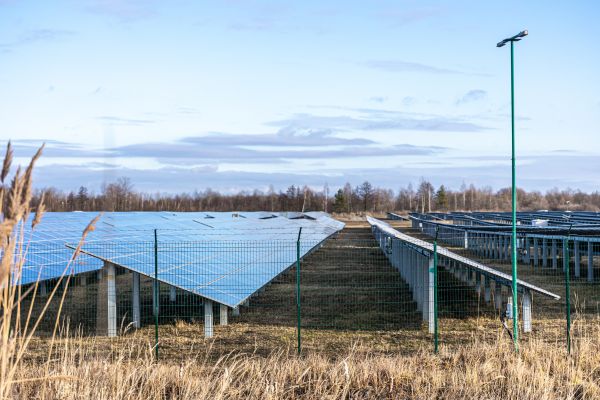
Solar power is entering a phase of scale and ambition that is changing how large infrastructure projects are planned. Installations that once ranged between 5 MW and 20 MW are now increasingly crossing 50 MW and 100 MW. These sites are shaping a new model of solar EPC (Engineering, Procurement and Construction), where the real test is not only generating more energy but building systems that work reliably across difficult landscapes.
Remote deserts, coastal belts and rocky terrain were once avoided because of risk, cost or lack of accessibility. Today, these very regions are becoming central to the expansion of utility-scale solar. The demand for land, rising interest in renewable power and improving engineering capabilities have pushed the industry into locations that demand more planning and more innovation.
Why Harsh Terrains Are Becoming the New Frontier
Developers previously preferred flat land and simple site preparation. Those locations are limited. As the solar industry grows, it must move into geographies that are tougher to access but offer other advantages such as abundant sunlight and availability of large land parcels.
Working in harsh terrains requires a different mindset. The challenges include extreme temperature variations, uneven or rocky land, strong winds, dust storms, humidity and limited infrastructure. These conditions influence cost, time, safety and the long-term performance of the plant. At the same time, they also make it possible to build larger sites with fewer constraints on space or land clearance.
Planning for Scale: What Makes a 100 MW Project Different
A large-scale solar installation is not simply a bigger version of a smaller project. It demands a different level of planning and engineering. Before any construction begins, EPC teams must analyse solar radiation patterns, soil characteristics, wind conditions and land preparation requirements. Every component, from cables and mounting structures to transformers and modules, must be chosen to suit the terrain.
Deserts can reach extremely high surface temperatures during the day and fall sharply at night, affecting both electrical and mechanical design. Coastal locations face corrosion from salt in the air. Rocky or uneven sites require specialized foundations instead of standard mounting. These conditions also influence the layout of panels, tilt angle, spacing and structural strength.
The goal is not just installation. It is building a stable foundation that supports the plant for decades.
Engineering for Tough Environmental Conditions
Solar projects in demanding environments begin with structural integrity. Panels must withstand high temperatures, wind loads and sometimes seismic activity. Mounting structures need to be resistant to corrosion and shifting soil. Cables, connectors and inverters should be selected for longevity and performance under such conditions.
Areas prone to dust or sandstorms call for robust cleaning mechanisms and maintenance planning. Choices around panel material, height and row spacing are again shaped by the terrain. Regions with strong winds demand anchoring solutions that prevent lifting or structural stress. Even small changes in engineering design can influence long-term efficiency and reliability.
The Logistics Challenge
A major part of large EPC work happens before a single module is installed. The logistics of moving equipment to remote or rugged terrain can be one of the most difficult components of the project. Transporting thousands of panels, wires, machines and structures often requires road building, special vehicles or alternative access routes.
Worker accommodation, medical services, safety planning and storage facilities have to be ready well before construction. This preparation is essential because delays or seasonal interruptions can slow down the entire project. Large-scale solar is a sequence of interconnected activities, and each one must align with the next.
Construction in Difficult Terrain
Once the site is ready, building in harsh conditions requires machinery and methods suited to the landscape. Levelling uneven land, drilling through rocky soil or working in shifting sand may require customized tools or construction patterns. Precision is important because a small deviation can affect panel alignment or structural integrity across a 100 MW layout.
Work scheduling may also vary. In hot climates, installation teams may work during cooler hours. Modular assembly and pre-engineered components help maintain consistency and pace. Quality checks, testing and commissioning play a larger role, ensuring the entire system is designed to operate at full capacity.
Why Storage and Grid Integration Are Essential
Many of the regions where these solar plants are built also face fluctuations in grid stability. Because of this, storage is now being integrated into utility-scale projects. Battery Energy Storage Systems (BESS) help maintain balance between supply and demand and make solar power available beyond daylight hours.
Storage also helps support peak loads and improve energy security. The combination of solar and storage changes how utilities view renewable energy. It becomes not just a source of power but part of the backbone of the grid.
Gujarat’s Role in Scaling Large-Scale Solar EPC
Gujarat has become one of the most important regions for large-scale solar development in India, especially for projects above 50 MW and 100 MW capacity. The state has led the expansion of solar parks, transmission corridors, and renewable-friendly land policies that make it possible to build projects in remote and challenging terrain. Areas like Kutch and Khavda have already demonstrated that utility-scale installations can succeed even in harsh climates, high-wind zones, and sandy landscapes. With strong infrastructure planning, grid integration initiatives, and state-level support for renewable energy, Gujarat has emerged as a testing ground for the next phase of India’s solar EPC evolution.
A Resilient Future for Solar EPC
The shift toward 100 MW solar projects in harsh terrains is a sign of confidence and maturity in the sector. What was once considered too complex or expensive is now achievable through better engineering, planning and execution. These projects prove that renewable energy can succeed where traditional models might have struggled.
Solar EPC is no longer just about panel installation. It is about designing projects that function in difficult environments, withstand extreme weather and support long-term energy goals. As the industry continues to evolve, building in challenging terrains will become the norm rather than the exception. It represents a future where clean energy reaches places that were once out of reach, pushing solar infrastructure to new levels of resilience and scale.


