Recent Post
-
 18 June 2025
The Future of Energy Storage in India – BESS
-
 17 February 2025
How Green Hydrogen Can Help Us Achieve Net-Zero Emissions
-
 17 February 2025
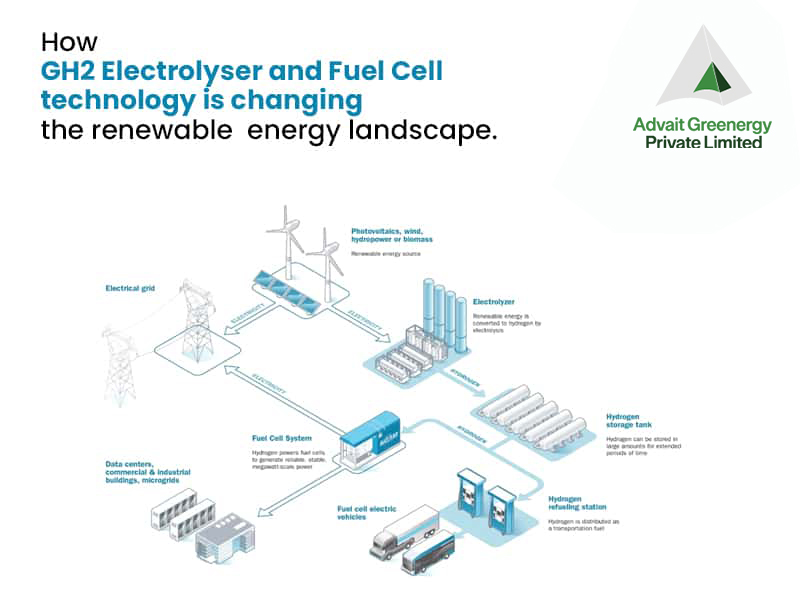
Revolutionizing Renewable Energy: GH2 Electrolyser and Fuel Cell Technology
-
 18 April 2026
Grey Hydrogen vs Green Hydrogen | Advait Greenergy | AGPL | Advait Group | Advait Energy | AETL
-
23 May 2026
THE SILENT KILLER OF BATTERIES | Advait Group | Advait Greenergy | AGPL | Advait Energy

October 27, 2026
Bess
BESS Suppliers and Manufacturers in India: How to Evaluate a Partner

Share On

BESS companies in India should be evaluated by the role they perform, the technical obligations they accept, and the commercial risk they can carry through the project life. A buyer should first separate cell manufacturing, system integration, and EPC responsibility, since these functions require different capabilities and different accountability.


Cell Manufacturer, System Integrator and EPC Contractor
A cell manufacturer produces the electrochemical cells used within the storage system. Its responsibility centres on cell design, manufacturing quality, performance characteristics and warranty terms at the cell level.A system integrator combines cells with battery management, power conversion, thermal management, controls and safety architecture into an operating storage system. Integration quality determines how individual components perform as one controlled asset, and is often where system-level performance guarantees originate.A BESS EPC contractor manages engineering, procurement, construction, grid interface, testing and commissioning within the contracted scope. Some organisations perform more than one of these roles, but a buyer should confirm which roles a given supplier actually performs directly, and which are subcontracted, since liability follows the party responsible for that specific scope.| Role | Primary Responsibility | Buyer Should Evaluate |
| Cell manufacturer | Cell production and cell-level performance | Chemistry, cycle characteristics, quality controls, warranty backing |
| System integrator | System architecture and component integration | Controls, thermal management, safety design, degradation management |
| EPC contractor | Project engineering and execution | Design capability, procurement, construction, testing, commissioning |
Technical Evaluation of Battery Energy Storage System Manufacturers in India
Cell chemistry and cycle life.
Cell chemistry should match the project's operating profile and contracted duty. Cycle life should be assessed against the contracted cycling obligation rather than treated as a standalone datasheet parameter, since a cell rated for a given cycle count under laboratory conditions which may differ with the actual daily cycling demand of the project and operating condition .Round trip efficiency and degradation.
Round trip efficiency indicates how much usable energy is returned after charging and discharging, and directly affects the economics of the asset over its operating life. Buyers should review the measurement boundary, operating conditions, and contractual testing method behind any stated figure. Degradation warranties should define how usable capacity changes over the contract period and under what operating conditions, and that warranty should correspond to the project's expected cycling pattern rather than a generic curve.Thermal management and safety.
Thermal management should keep the battery system within its approved operating conditions and manage heat across the full system, since poor thermal control accelerates degradation and raises safety risk. Safety certification should be reviewed against applicable project and procurement requirements, and confirmed as current for the specific product being supplied.Commercial Evaluation of BESS EPC Companies in India
Technical compliance alone does not establish delivery capability. Commercial evaluation should examine balance sheet strength, delivered project record, O&M capability, and the entity standing behind long-term warranties.Balance sheet strength indicates whether a supplier can sustain warranty and O&M obligations over an operating life that typically extends well beyond construction. The delivered project record should be relevant to the proposed application and contractual structure, not only to projects still under development. O&M capability should cover monitoring, maintenance, fault response, spares availability, and escalation procedures. Warranty backing requires clear allocation: procurement teams should identify whether obligations sit with the cell supplier, the system integrator, the EPC contractor, or another contracting entity, since a warranty is only as strong as the entity honouring it.Utility Procurement Versus C&I Procurement
Utility-scale BESS procurement in India typically follows a structured tender process, with long-term contracts, defined performance obligations, and regulatory oversight from the relevant state or central body. Emphasis falls on tender compliance, grid interface, operating obligations, and the allocation of long-term performance risk.C&I procurement is generally more direct, negotiated between buyer and supplier, and sized around the facility's own operating requirement, electrical load profile, site constraints, and integration with the existing electrical system, rather than a grid-level dispatch requirement. The evaluation framework therefore shifts with the project's use case, ownership structure, and contractual obligations.Build-Own-Operate Versus Turnkey Supply
Under a build-own-operate structure, the developer builds the asset, retains ownership, and operates it for the contracted concession period, taking on operating and financing risk in exchange for revenue over that period. Under turnkey supply, the EPC contractor delivers the defined project scope for handover, and the buyer takes on ownership and operating responsibility directly once the contract's warranty period ends. Procurement teams should establish, before contracting, where long-term operating responsibility, warranty obligations and performance commitments sit after commissioning, since this differs materially between the two models.Viability Gap Funding and BESPA
MNRE viability gap funding supports utility-scale battery storage projects where the tariff alone does not make a project financially viable, through a capital subsidy that narrows the funding gap. Projects awarded with viability gap funding typically carry specific conditions on capacity, commissioning timelines, and performance, which a buyer evaluating a similar developer's track record should factor in.Some utility-scale procurement structures also use a dedicated long-term offtake or purchase agreement between the developer and the procuring utility to define commercial and operating terms over the concession period, which is known as BESPA (Battery Energy Storage Purchase Agreement).Technical Evaluation Checklist
| Evaluation Area | What to Check |
| Supplier role | Cell manufacturer, integrator, EPC contractor, or combined responsibility |
| Cell chemistry | Suitability for the intended operating duty |
| Cycle life | Alignment with the contracted cycling obligation |
| Round trip efficiency | Test boundary, operating conditions and measurement method |
| Degradation | Capacity retention terms and operating assumptions |
| Thermal management | Cooling architecture and operating control |
| Safety | Applicable certification requirements |
| Project record | Relevant delivered references |
| O&M | Monitoring, maintenance, response and spares capability |
| Warranty | Responsible entity and enforceability |
| Commercial strength | Ability to support long-term obligations |
| Contract model | Build-own-operate or turnkey responsibility |


