

Target Q1 2027
Stationary Power and Fuel Cell Generators
A hydrogen fuel cell generator gives backup and prime power to data centres and critical facilities. Run time is set by the hydrogen store, not battery size.
Advait is setting up domestic manufacturing of PEM (proton exchange membrane) hydrogen fuel cells with TECO Fuel Cell Technology AS of Norway and AVL List GmbH of Austria. The programme brings a 400 kW fuel cell module and a 100 kW fuel cell stack to India for stationary power, heavy-duty mobility and maritime use.
A fuel cell turns hydrogen back into electricity. It completes Advait's hydrogen value chain: solar generates power, electrolysers make hydrogen, and fuel cells supply clean power where and when it is needed.
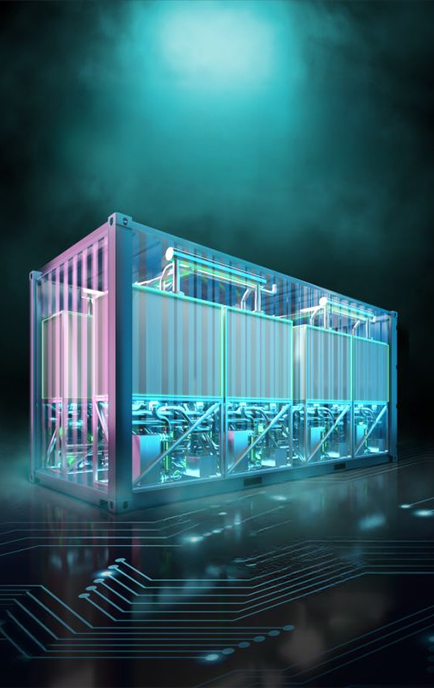
A hydrogen fuel cell makes electricity from hydrogen and the oxygen in air. It does this through an electrochemical reaction, not by burning fuel. The only by-products are water and heat, which makes it one of the cleanest forms of fuel cell energy.
Single cells are layered into a stack. Stacks are then built into modules with air supply, hydrogen management, cooling and power electronics. To get more power, you add more stacks and modules.
Hydrogen Fuel Cell Diagram
Zero combustion, so no smoke at the point of use; only water and heat come out. Power runs for as long as hydrogen is supplied. PEM fuel cells start quickly, follow changing load well, and scale from a 100 kW stack to multi-megawatt systems.
A battery stores a fixed amount of energy and has to be recharged. A fuel cell keeps generating power as long as hydrogen is supplied, so run time depends on the hydrogen store, not the fuel cell. This suits long-duration backup and heavy-duty use where battery weight or charging time is a limit.
Advait's fuel cell programme is part of its wider hydrogen solutions business. It is built on a structured technology partnership covering knowledge transfer, joint engineering, testing and validation, and long-term technical cooperation.
Local manufacturing, adaptation, deployment and market development in India.
Develops and commercialises fuel cell systems for stationary, mobility and maritime use.
Co-development partner for the 400 kW module. Supports development, simulation, validation and testing.
Advait Energy Transitions and TECO2030 Energy Solutions AS announce a partnership to set up licensed manufacturing of TECO fuel cell technology in India.
Advait Energy Transitions and TECO Fuel Cell Technology AS sign an MoU for hydrogen fuel cell manufacturing in India, witnessed by the Prime Ministers of India and Norway.
Target start of production for stationary power systems, including data centres.
Target start of production for heavy-duty transport and mobility. Maritime applications develop alongside through 2028.
At least 200 skilled jobs expected across engineering, production, systems integration and project execution.
The partnership supports the Government of India's Atmanirbhar Bharat initiative and the National Green Hydrogen Mission.
Advait is building PEM fuel cell manufacturing in India in phases. It starts with stack assembly for stationary use and scales to a fully automated plant for mobility and maritime demand.
PEM fuel cell stack assembly line for stationary applications.
PlannedProduction for heavy-duty transport and mobility.
TargetMaritime and shipping systems developed alongside mobility.
In developmentFully automated, large-scale PEM manufacturing facility.
Planned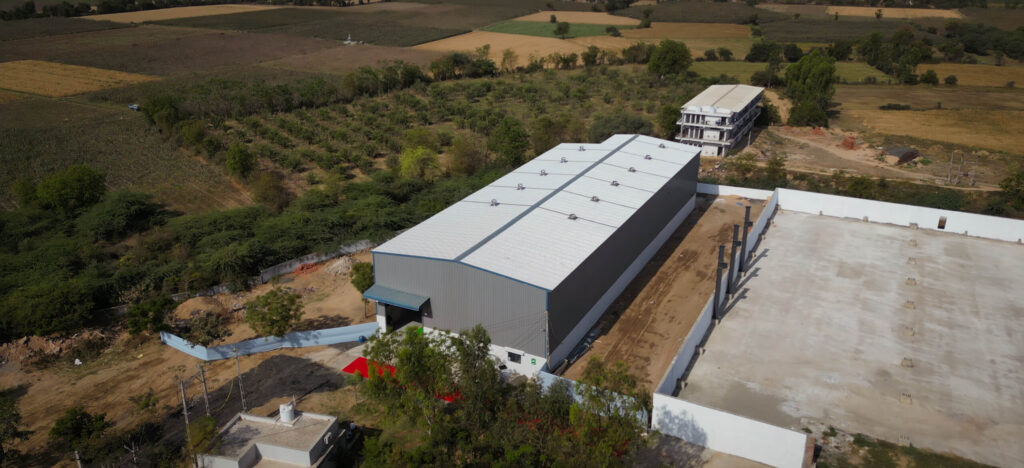
Fuel cells will be made at Advait's integrated manufacturing facility at Gangad, on the Ahmedabad–Dholera corridor in Gujarat. The same site is planned for alkaline electrolysers and battery energy storage systems.
Keeping the technologies that make, store and use hydrogen under one roof means shared engineering, shared testing and a shorter supply chain.
The 400 kW module and 100 kW stack are modular and can be scaled into multi-megawatt systems. They fit into vehicles, distributed power systems and hybrid renewable setups.
A hydrogen fuel cell generator gives backup and prime power to data centres and critical facilities. Run time is set by the hydrogen store, not battery size.
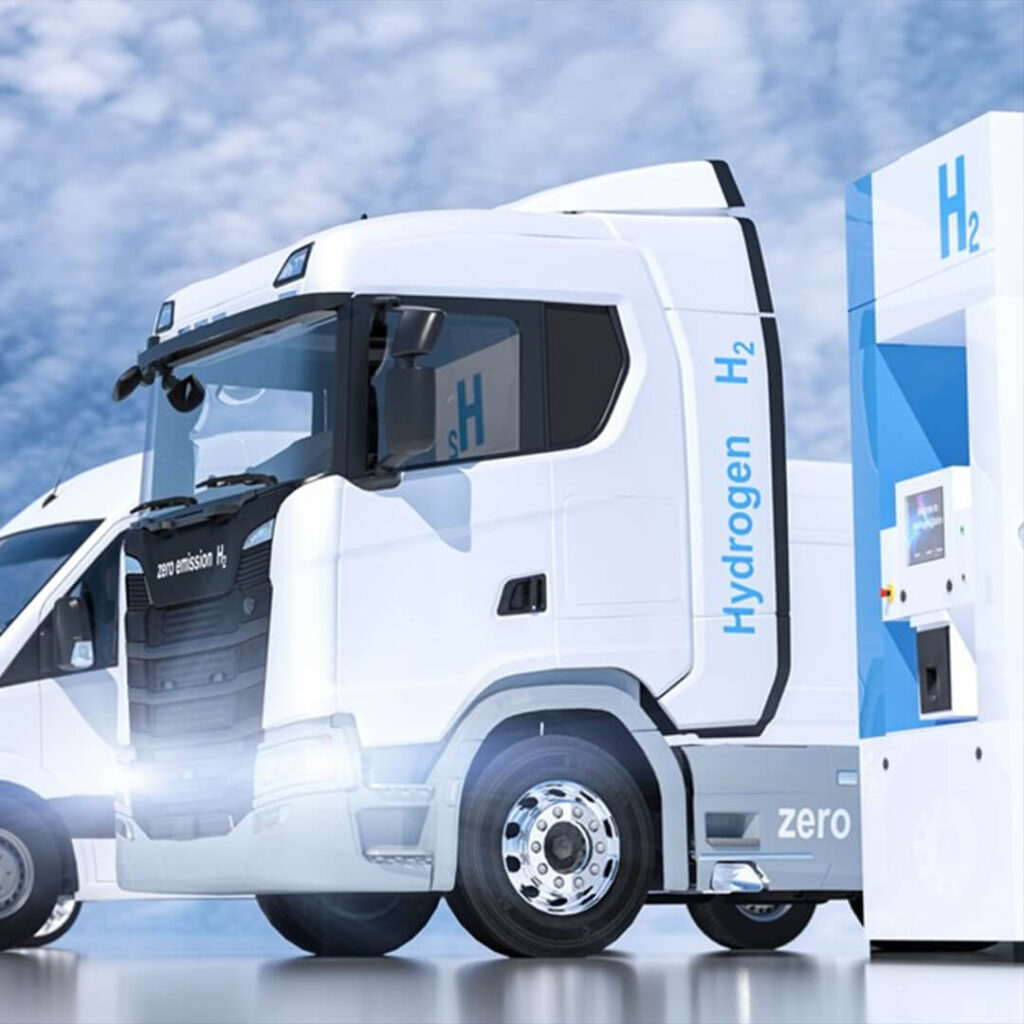
Fuel cell power for trucks, buses and heavy vehicles, where quick refuelling and long range favour hydrogen over batteries.
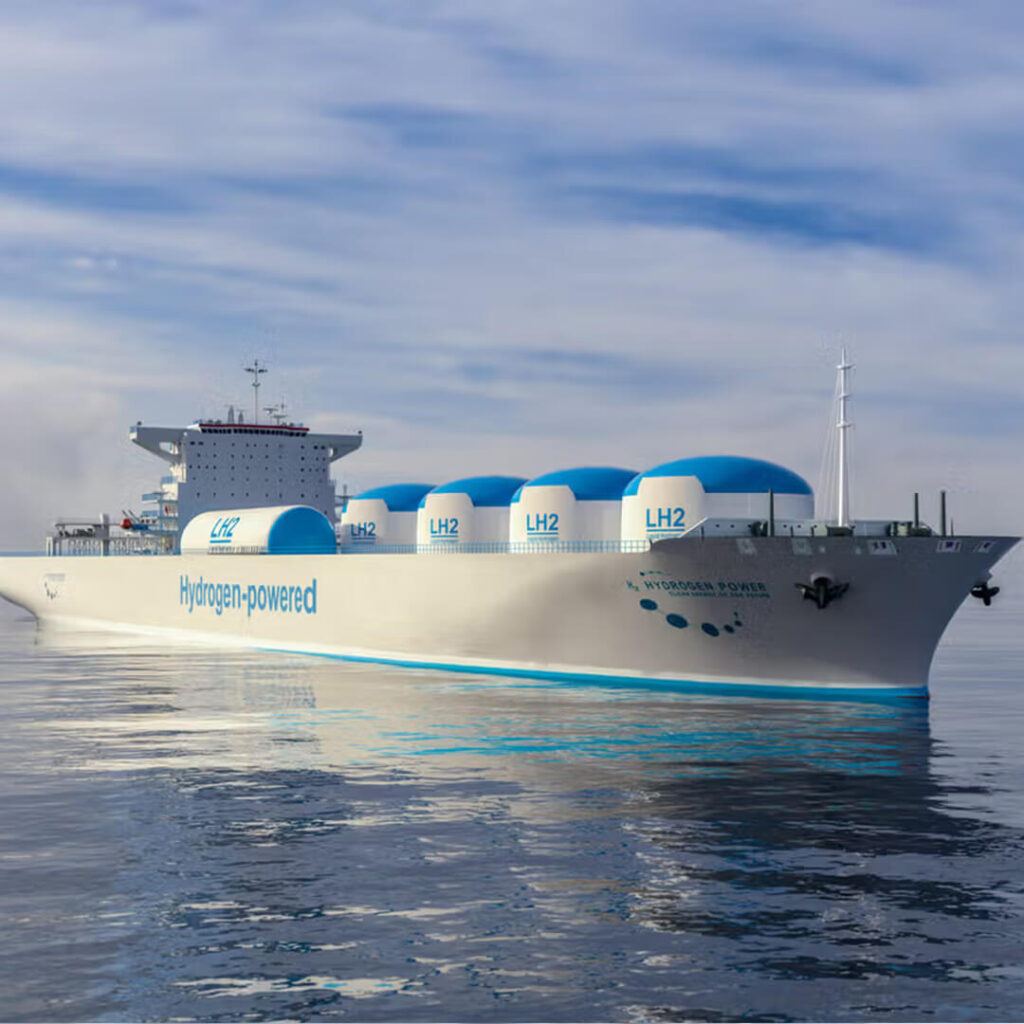
Fuel cell systems for vessels and port applications, developed alongside the mobility programme.
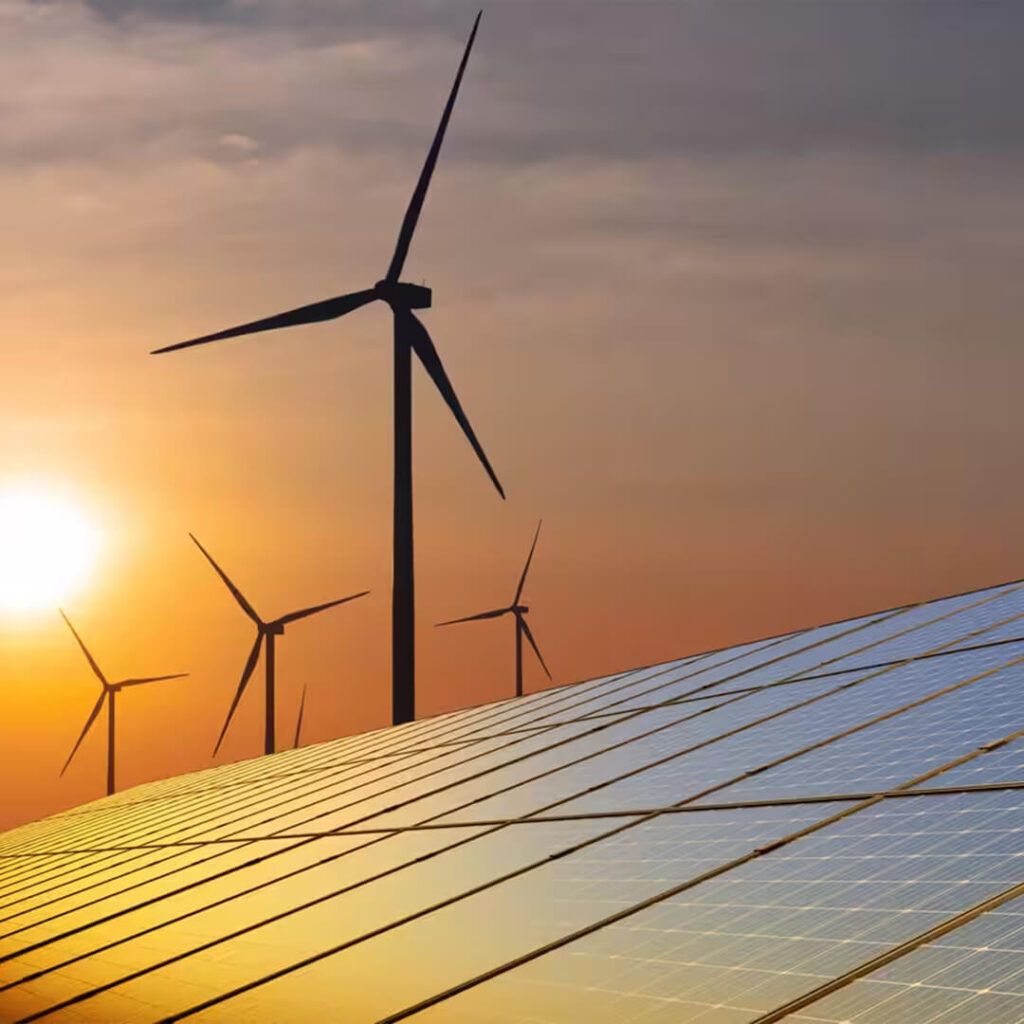
Fuel cells paired with solar, storage and electrolysers to supply power after dark, as already running at Rishikesh.
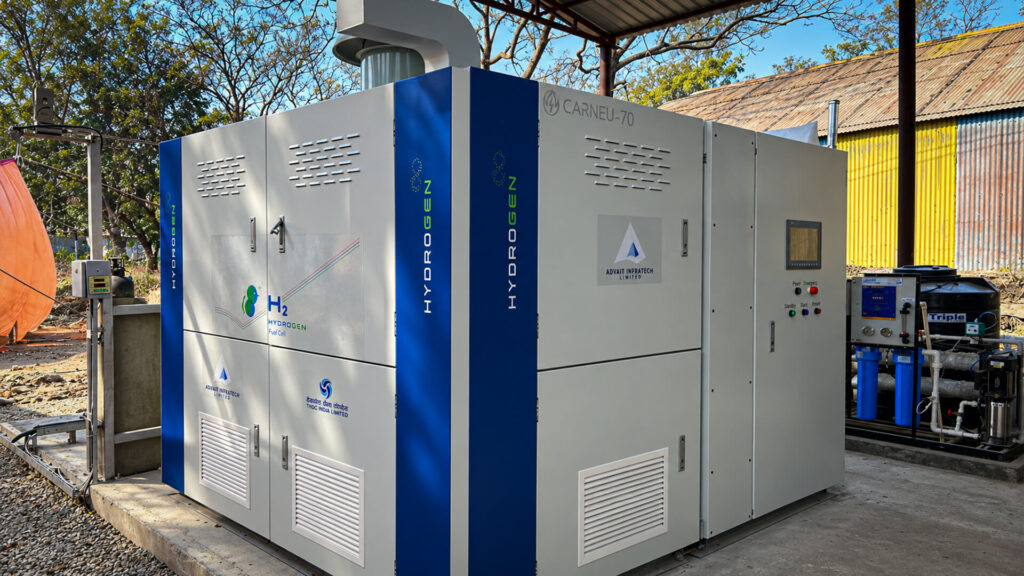
Advait's Green Hydrogen microgrid at THDC India Limited, Rishikesh, has been running since January 2024. It pairs a 300 kW alkaline electrolyser and hydrogen storage with a PEM fuel cell. Solar power makes hydrogen by day. At night, the fuel cell turns that stored hydrogen back into electricity for THDCIL's grid.
The project shows the full green hydrogen loop that Advait's fuel cell programme is built to scale.
A fuel cell can run on several forms of hydrogen and hydrogen carriers. The right choice depends on the application, the space available, safety needs and how the hydrogen will be delivered.
| Hydrogen source | Capability |
|---|---|
| Compressed hydrogen (CH₂) | Can operate at pressures up to 700 bar |
| Liquid hydrogen (LH₂) | Keeps high efficiency with low H₂ input pressure |
| Liquid organic hydrogen carriers (LOHC) | No compression needed, which makes handling safer |
| Metal hydride hydrogen storage | Unique heat regulation between fuel tank and fuel cell |
| Methanol / ammonia | Active research on pre-treatment |
The National Green Hydrogen Mission is building both the supply of green hydrogen and early demand for fuel cell vehicles. That makes the case for a hydrogen fuel cell in India stronger every year.
Sources: Ministry of New and Renewable Energy disclosures as reported by pv magazine India and Angel One.
Solar EPC, battery storage, electrolysers and fuel cells within one group.
A PEM fuel cell in service at the THDCIL Rishikesh microgrid since January 2024.
Module and stack co-developed by TECO and AVL, adapted for Indian conditions.
Local production supports Atmanirbhar Bharat and shortens supply chains.
From a 100 kW stack to multi-megawatt configurations.
Backed by Advait Energy Transitions Limited, listed on the BSE and NSE.
Tell us your application, power need and hydrogen source. Our team will send an initial assessment, including indicative hydrogen fuel cell price guidance for India based on your project.
Hydrogen enters at the anode and splits into protons and electrons. Protons pass through the membrane, while electrons flow through an outside circuit as electricity. At the cathode they meet oxygen from air and form water. There is no combustion; the only by-products are water and heat.
A proton exchange membrane (PEM) fuel cell turns hydrogen and oxygen from air into electricity through an electrochemical reaction. It runs at a relatively low temperature, starts quickly and responds well to changing load. This suits stationary backup, vehicles and vessels.
No combustion and no smoke at the point of use, only water and heat. Power runs as long as hydrogen is supplied. They start fast, follow load changes well, and scale from a 100 kW stack to multi-megawatt systems.
A battery stores a fixed amount of energy and must be recharged. A fuel cell makes electricity for as long as hydrogen is supplied, so energy capacity is set by the hydrogen store. That makes fuel cells a good fit for long-duration backup and heavy-duty use where battery weight or charging time is a limit.
Yes. A fuel cell generator gives backup or prime power to data centres and critical facilities without combustion. Advait's stationary power systems are targeted for production from Q1 2027.
Advait is setting up PEM fuel cell manufacturing in India with TECO Fuel Cell Technology AS of Norway and co-development partner AVL List GmbH of Austria. Under an MoU signed in May 2026, a 400 kW module and a 100 kW stack will be brought to India for local manufacture. Production for stationary power is targeted from Q1 2027.
Price depends on power rating, application, hydrogen source and storage, and how the system is integrated on site. Share your requirement through the form above and our team will respond with an initial assessment for your project.
The platform is built around a 400 kW hydrogen fuel cell module and a 100 kW fuel cell stack. Both are modular and can be scaled into multi-megawatt configurations.
The Advait and TECO programme targets three sectors: stationary power including data centres, heavy-duty transport and mobility, and maritime and shipping. Fuel cells also work in hybrid renewable systems and microgrids, as at Advait's site at THDC India Limited, Rishikesh.
An electrolyser uses electricity to split water into hydrogen and oxygen. A fuel cell does the reverse and combines them to make electricity. Together, they let renewable power be stored as hydrogen and turned back into power when needed. Advait works on both.
Compressed hydrogen, liquid hydrogen, liquid organic hydrogen carriers, metal hydride storage and, with pre-treatment, methanol or ammonia. The right source depends on the application, storage space, safety needs and supply logistics.
Production for stationary power, including data centres, is targeted from Q1 2027. Heavy-duty mobility is targeted from Q1 2028, with maritime applications developed alongside through 2028. These are targets and depend on project progress.
Independent Coverage